Beneath the palm-lined streets and pristine beaches of Naples, Florida, lies a remarkable piece of Naples history that many residents and visitors unknowingly walk over every day. The Naples canal, often referred to as the Naples Indian Canal, is not just a forgotten waterway—it is a testament to the ingenuity of Native American engineering long before modern development shaped the region.
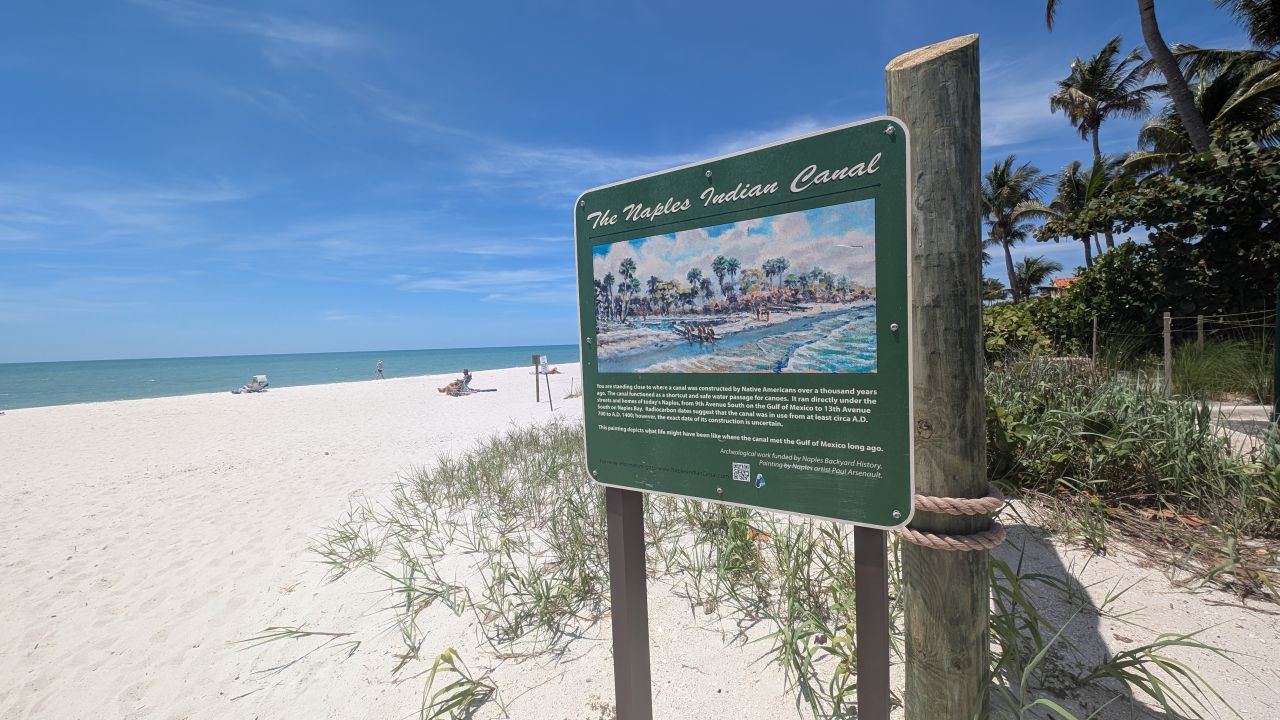
Standing today near the Gulf, the green historical sign shown in your photo marks where this ancient canal once met the shoreline. The artwork on the sign paints a vivid picture of what life may have looked like centuries ago, with Native Americans navigating shallow waters in dugout canoes. It’s a peaceful scene, but it represents something much bigger: one of the most impressive prehistoric construction projects in Florida.
The Naples canal stretched approximately 4,150 feet—nearly 0.8 miles—connecting the Gulf of Mexico to Naples Bay. Built by indigenous people, likely the powerful Calusa tribe, the canal may date back as early as A.D. 200, though many studies suggest it was actively used between 700 and 1400 A.D. This was not a simple trench dug in the sand; it was a carefully engineered waterway designed to maintain consistent depth by tapping into the natural water table.
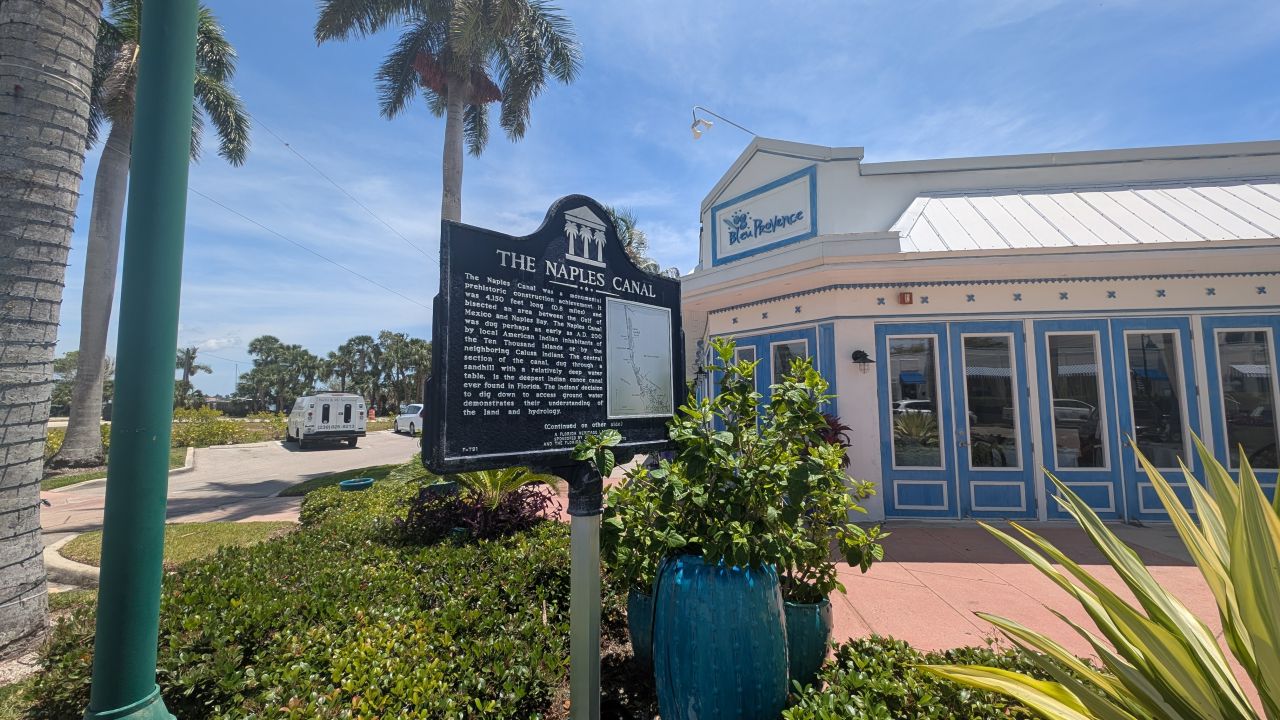
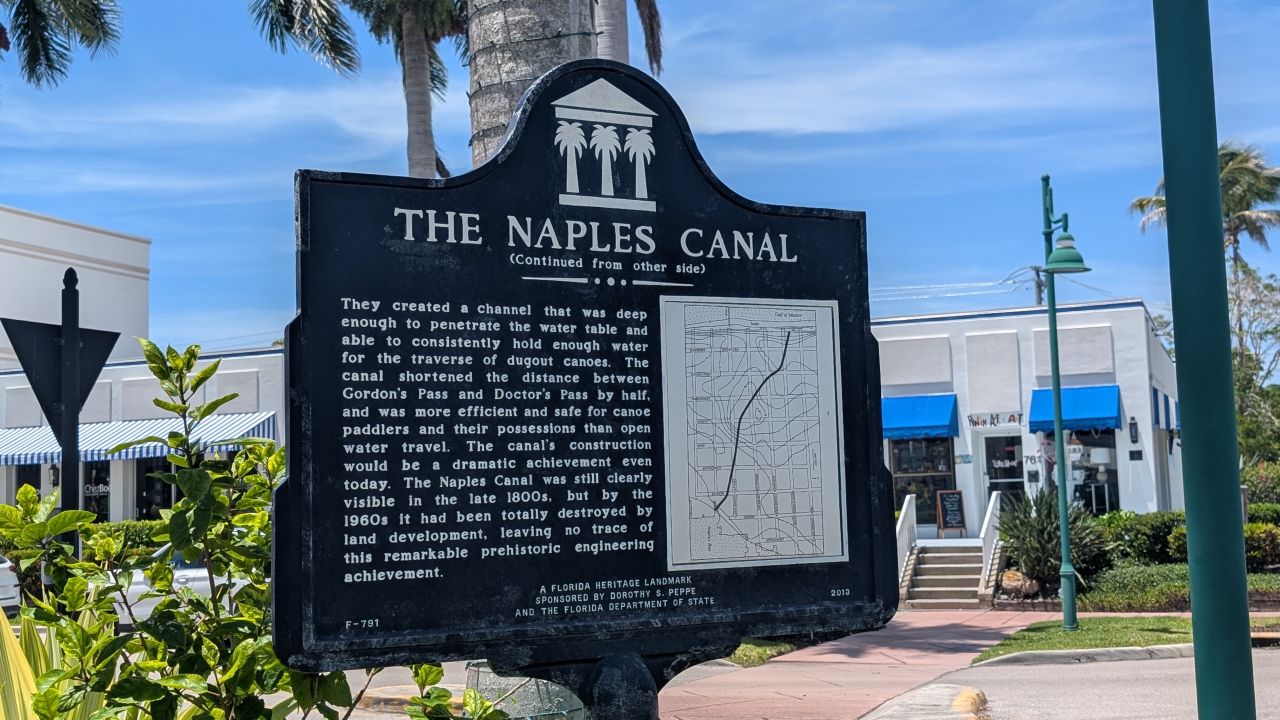
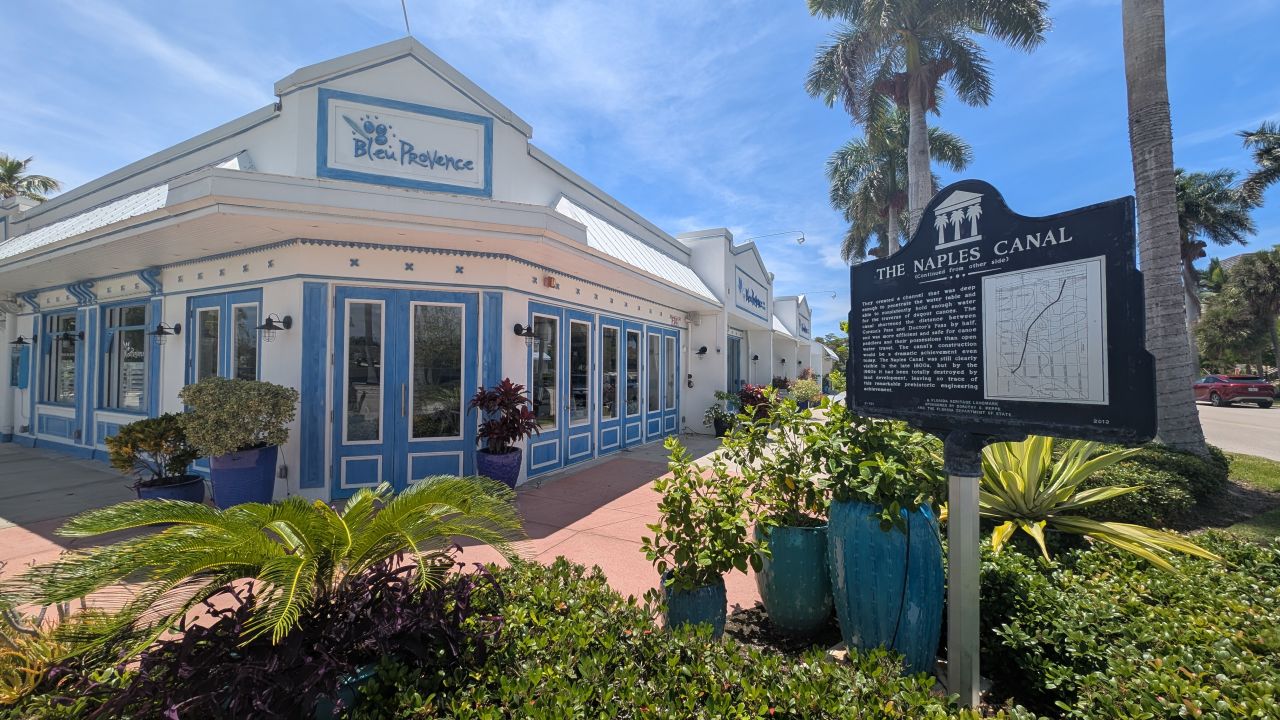
The black historical marker in your second photo reinforces just how extraordinary this achievement was. It describes the canal as the deepest Native American canoe canal ever discovered in Florida. That alone sets it apart—but what’s even more impressive is why it was built. The canal provided a safer and faster inland route for travel, cutting what could have been a long and dangerous journey along the Gulf into a much shorter and more protected passage.
Imagine paddling through what is now Old Naples—gliding quietly through a shaded waterway instead of navigating open coastal waters. For the Native American inhabitants of the region, this canal was essential for transportation, trade, and daily life. It also demonstrates a deep understanding of the environment, including hydrology and terrain, long before modern engineering tools existed.
Unfortunately, as Naples, Florida grew into the vibrant coastal city it is today, the canal slowly disappeared. By the early 1900s, development began covering sections of it, and by the 1960s, the canal had been completely filled in and erased from view. What remains now are markers like the ones in your photos—quiet reminders of a hidden past beneath the city’s streets and homes.
Today, efforts by local historians and organizations have helped bring renewed attention to this lost landmark. Walking through Old Naples, especially near the beach access points, you’re not just enjoying a beautiful coastal town—you’re standing above a prehistoric marvel that once connected land, water, and culture.
The story of the Naples canal is more than just a historical footnote. It’s a powerful reminder that Naples, Florida was shaped not only by modern development, but by the innovation and resilience of its earliest inhabitants. And while the canal itself may no longer be visible, its legacy still flows quietly beneath the surface of Naples history.